Water bottles have become one of the most popular promotional and retail products in the custom merchandise space. From branded corporate giveaways to personalized tumbler collections, the demand for durable, waterproof decoration on drinkware continues to grow. For businesses looking to expand their offerings, UV DTF water bottle stickers offer a production method that balances print quality, durability, and manufacturing efficiency.
In this guide, we walk through how UV DTF transfers work on stainless steel, glass, plastic, and ceramic water bottles, what quality standards to expect, and how wholesale buyers can source custom sticker production at factory-direct pricing.
What Are UV DTF Water Bottle Stickers?
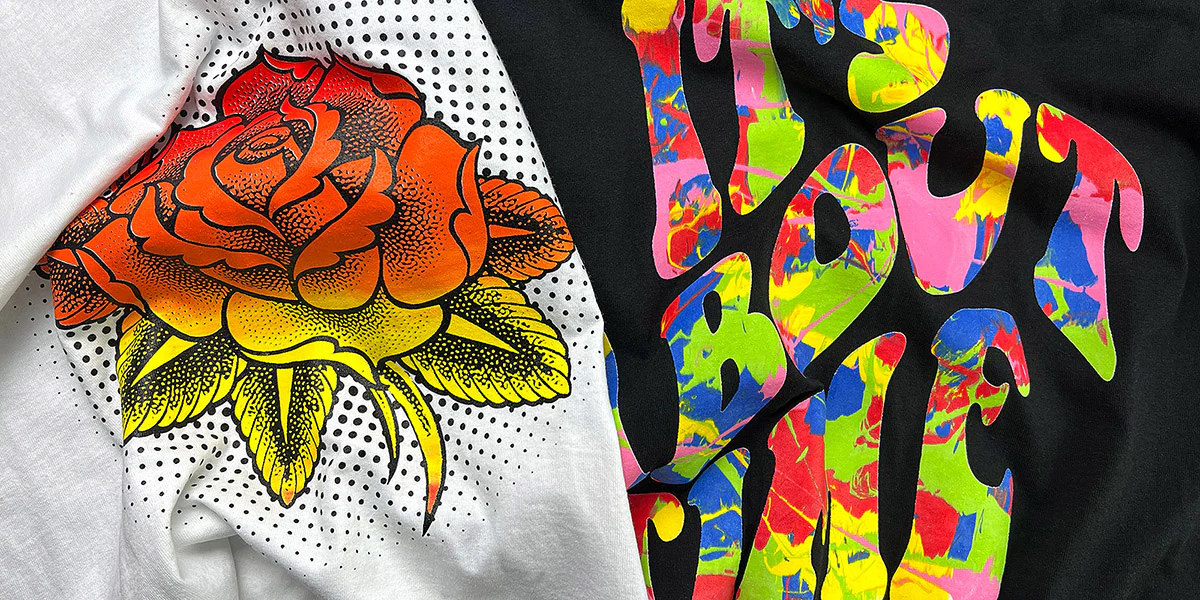
UV DTF (Direct to Film) is a digital printing method where designs are printed onto a special adhesive film using UV-cured ink, then transferred onto a target surface. Unlike standard vinyl stickers that rely on adhesive backing alone, UV DTF transfers use a combination of high-adhesion glue, UV-cured color layers, and a protective top coat. This construction gives the decal significantly better resistance to water, heat, and physical abrasion — all critical factors when the finished product needs to survive daily use as a water bottle.
For a deeper understanding of the production process, read our Ultimate Guide to UV DTF Printing.
Why UV DTF Transfers for Water Bottles?
Traditional decoration methods for drinkware — screen printing, pad printing, and epoxy domed stickers — each come with trade-offs. Screen printing requires setup fees that make small-batch runs expensive. Pad printing works on curved surfaces but limits color options. Standard vinyl stickers peel off after a few dishwasher cycles.
UV DTF transfers solve all three problems:
- No minimum order roadblocks. We run production in batches as small as 50 sheets per design, making it viable for test runs and catalog expansion without overcommitting inventory.
- Full-color without screening costs. CMYK + white + varnish in a single pass. Gradients, fine text, and photographic images reproduce accurately.
- Durability that matches real-world use. Properly applied UV DTF transfers withstand dishwasher cycles, hand washing, refrigeration, and outdoor exposure.
Surface Compatibility: Which Water Bottles Work Best?
Here is how UV DTF transfers perform across the most common drinkware materials we process at our factory:
Stainless Steel
Stainless steel bottles — from vacuum-insulated tumblers to sport bottles — are the most popular substrate we see. The smooth, non-porous surface provides excellent adhesion. Bond strength on stainless steel consistently passes our 72-hour immersion test and 50-cycle dishwasher test.
Glass Bottles
Glass is an ideal surface for UV DTF. The non-porous nature creates a strong mechanical bond with the adhesive layer. For glass bottles used in retail or hospitality, we see transfer lifespans exceeding 18 months with standard hand washing.
Plastic / Tritan
Plastic water bottles require attention to surface energy. We apply a surface treatment step before application to ensure consistent adhesion. Once applied, UV DTF transfers hold well on bottles used for room-temperature and cold beverages.
Ceramic
Ceramic mugs and bottles work well with UV DTF transfers. The glazed surface provides good adhesion, and transfers handle microwave-safe warming (though we recommend hand washing to maximize lifespan).
Durability Testing Standards
Our factory runs standard durability tests on every production batch:
- Water immersion: No lifting, peeling, or color change after 72 hours submerged in room-temperature water
- Dishwasher test: Survives 50 standard dishwasher cycles (top rack, heated dry off) without edge lifting or color fade
- Scratch resistance: No visible surface damage after ASTM-standard abrasion testing
- UV fade test: Less than 10% color shift after 500 hours of QUV accelerated weathering
These results are available upon request for any wholesale order. We maintain batch records so buyers can trace quality back to specific production runs.
Application Guide: How to Apply UV DTF Water Bottle Stickers
One of the reasons UV DTF transfers are popular with POD store owners and custom studios is the simple hand application process. No heat press, no solvent — just a squeegee and a few minutes of care.
- Clean the surface. Wipe the bottle with isopropyl alcohol (70% or higher). Remove all oils, dust, and residue. Let it dry completely.
- Peel the release film. The transfer sits between a silicone release liner and a clear application tape. Peel the release liner away.
- Position the transfer. Place the exposed adhesive side against the bottle. The clear application tape stays on top, letting you see exact placement.
- Squeegee from center out. Use firm, even pressure with a plastic squeegee to push out air bubbles. Work from the center toward the edges.
- Remove the application tape. Peel the tape back at a sharp angle (close to 180 degrees). If any part lifts, press it down and squeegee again.
For curved water bottle surfaces, we recommend transfers designed to conform. Our factory produces UV DTF transfers with a thin adhesive layer that follows curved contours without wrinkling. Test samples are available so you can evaluate application on your specific bottle shapes before placing bulk orders.
For more application tips, see our How to Apply UV DTF Transfers guide.
Bulk Ordering and Wholesale Pricing
As a factory-direct supplier, we structure pricing around production efficiency:
- Sheet-based pricing. We print on A4 and A3 sheets. Each sheet holds multiple stickers depending on design size. Larger quantities drive unit cost down.
- Design complexity. Full-color CMYK with white ink underlay and varnish top coat are standard. No additional screening or plate costs.
- Bulk tiers. Orders of 100+ sheets qualify for production-tier pricing. Orders of 500+ sheets receive our best per-sheet rate with priority scheduling.
- Custom sizes. For bottle wraps and large decals, we adjust layouts to maximize yield and minimize waste.
Shipping and Lead Times
We ship worldwide with these timelines:
- Production: 3–5 business days for standard orders (up to 500 sheets). Rush production available.
- Shipping: Express courier (3–7 days) or economy air freight (10–18 days). Sea freight available for container-volume orders.
- Sample turnaround: 2–3 business days to produce, shipped at your choice of courier.
Frequently Asked Questions
Are UV DTF water bottle stickers waterproof?
Yes. UV DTF transfers are fully waterproof once applied. The UV-cured ink and protective top coat create a barrier that prevents water from reaching the adhesive layer. Our transfers pass 72-hour submersion testing without degradation.
Can UV DTF stickers go through the dishwasher?
Yes, with guidelines. We recommend top-rack dishwasher use with the heated dry setting turned off. Transfers on stainless steel and glass surfaces typically survive 50+ dishwasher cycles. Hand washing extends the lifespan further.
What is the minimum order quantity for custom water bottle stickers?
We can produce as few as 50 sheets per design for standard UV DTF transfers. Each sheet contains multiple stickers depending on size. This low MOQ makes it practical to test new designs, run limited editions, or cover small-batch client orders without carrying excess inventory.
What file formats do you accept for custom designs?
We accept AI, PDF, PSD, EPS, CDR, PNG, and JPEG files. Preferred formats are AI and PDF with text converted to outlines and images at 300 DPI or higher. We include a free design check with every order to catch file issues before production starts.
How do UV DTF stickers compare to epoxy stickers for water bottles?
Epoxy domed stickers offer a thicker, glossy finish but require a separate curing process and have higher per-unit costs. UV DTF transfers provide a slimmer profile, faster production turnaround, lower cost at scale, and comparable waterproofing. For most water bottle applications, UV DTF offers better value.
Conclusion
UV DTF water bottle stickers give wholesale buyers a production method that combines print quality, surface versatility, and factory-direct pricing. From stainless steel tumblers to glass bottles and plastic sport bottles, the technology handles curved surfaces and daily-use exposure better than most alternatives at a comparable cost point.
We have been producing UV DTF transfers at our facility for over four years and ship to buyers in more than 30 countries. Whether you are looking to test a few designs or fill container-volume orders, our production team can match your timeline and quality requirements.
Ready to take your product line to the next level? Contact UV DTF Decor today to discuss your custom transfer requirements and request a free quote.
54 ready-made designs, custom prints and sample packs — sent to your inbox.