Surfaces, tack levels and the way to apply — what sticks to what, and what to test first. If your product isn't listed, send us a sample and we'll confirm before you order.
The most common reason a wrap lifts is the wrong tack level for the surface. This is the pairing that works.
| Surface | Recommended wrap | Notes | Wash resistance |
|---|---|---|---|
| Glass & glazed ceramic | Standard wrap | Smooth non-porous surface — the easiest combination | Good |
| Coated metal | Standard wrap | Painted or lacquered metal bonds well | Good |
| Powder-coated surfaces | High-tack wrap | Slightly irregular surface — standard film may lift at the edges | Test recommended |
| Acrylic & rigid plastics | Standard wrap | Check for surface treatments or coatings first | Good |
| Textured / embossed | High-tack wrap | Pressure during application matters more than tack here | Test recommended |
| Bare / untreated metal | TBC | Surface energy may be too low — needs testing | Test required |
| Wood & leather | TBC | Porous and inconsistent — send us a sample to test | Test required |
No heat press, no curing oven. Position, rub, peel — the printed layer stays on the product and the carrier comes away clean.
| 01 · Position | Print side down on a clean, dry surface |
|---|---|
| 02 · Rub | Even pressure from the centre outwards |
| 03 · Peel | Lift a corner — the carrier comes away clean |
Guidance covers the most common surfaces; for unusual finishes, send a sample and we will test first.
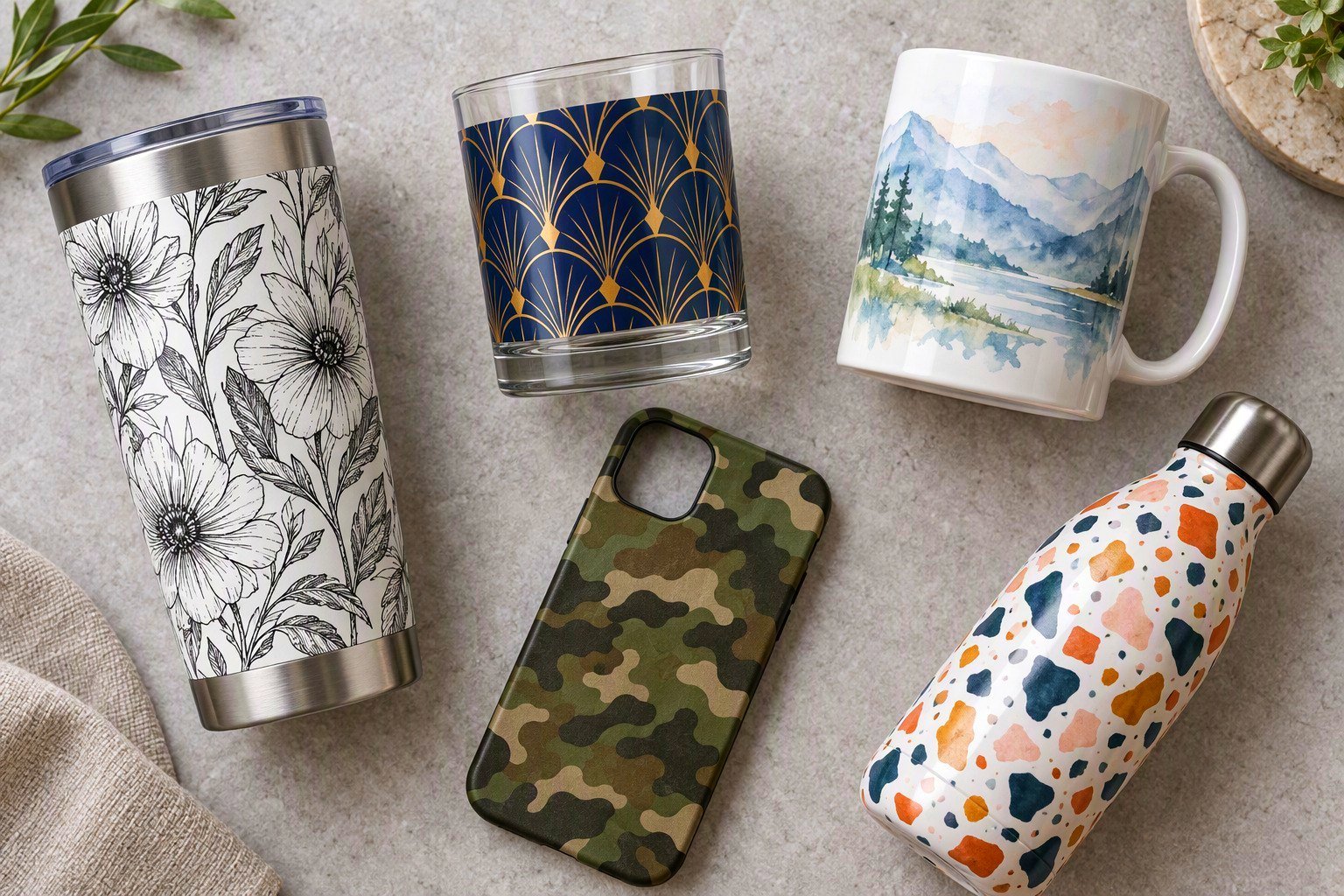
Applied rangeTell us the products you decorate and how they sell. We'll recommend the right pairing in writing before you order — and if something needs a test, we'll say so.
Ask about your productsThe price list pack includes the design sheets, the application steps and the surface guidance.