Ceramic ornaments hold their color for decades and give any gift program a premium look. The sourcing problem stays the same: how do you lay full-color artwork onto a glazed, curved, kiln-fired surface without a screen-printing line or a heat press? For most studios the answer is UV DTF on ceramic ornament blanks — applied by hand in under half a minute and cured at room temperature. This guide covers surface compatibility, adhesion testing, application steps, durability, and how buyers structure a UV DTF on ceramic ornament program.
We are UV DTF Decor, a factory producing UV DTF transfers, cup wraps, and custom decals for glass, metal, wood, plastic, and ceramic. When you order UV DTF on ceramic ornament designs from us, we handle everything from design to delivery: artwork setup, printing, lamination, die-cutting, packaging, and export shipping all happen in our own facility, so unit costs stay predictable across repeat seasonal programs.
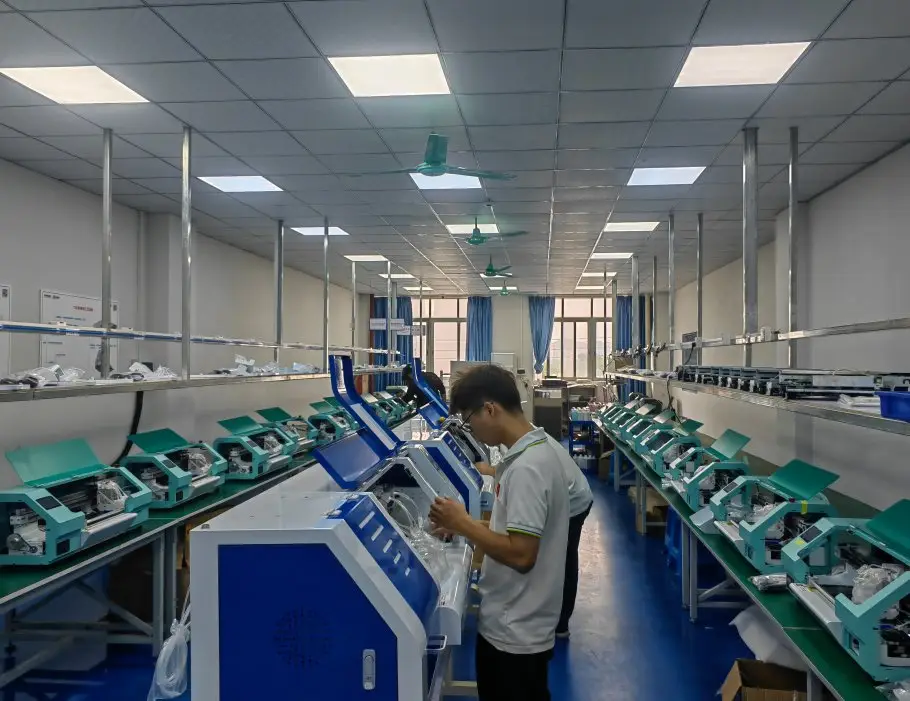
What UV DTF Means for Ceramic Decoration
UV DTF (Direct to Film) is a digital printing method: full-color artwork is printed onto an adhesive film, covered with a protective varnish layer, and cured with UV light. The sheet is die-cut around each design and shipped with a clear application tape on top. Unlike sublimation, it needs no pre-coated blanks and no heat; unlike screen printing, no plate per color. Applying UV DTF on ceramic ornament surfaces is a cold, dry process — align, press, peel.
Ornament programs are seasonal and design-heavy, so flexibility matters. One film sheet can carry a single large bauble design or twelve small ones, making a 40-SKU assortment inside one run straightforward. And because the process is digital, a 20-piece proof costs about the same per unit as a 20,000-piece run; only press time and film length change.
Which Ceramic Surfaces Accept UV DTF on Ceramic Ornament Transfers
Ceramic is not one material. Three variables decide how cleanly UV DTF on ceramic ornament blanks bond, and how long the graphic stays put:
- Glaze finish. High-gloss glaze gives the strongest immediate grab. Matte, satin, and crackle glazes hold well too, but need a wipe with 70% isopropyl alcohol (IPA) first to remove mold-release residue and kiln dust — the most common cause of edge lift in the field.
- Curvature and radius. Flat discs and low-dome ornaments are the easiest blanks. On a 60 mm sphere a 50 mm wide design fights the curve, so we keep UV DTF on ceramic ornament artwork between 25 mm and 40 mm on tight spheres and press from the center outward.
- Surface energy. Some decorators apply a silicone anti-scratch coat after firing; an IPA wipe removes its top layer. Waxed or oiled blanks need warm water and mild soap, a full dry, then the IPA wipe.
Unglazed bisque is a special case: UV DTF on ceramic ornament bisque blanks bond well but read matte, since the porous body absorbs part of the varnish. That suits rustic lines; for gloss, apply a water-based clear coat after 24 hours of curing.
How We Validate Adhesion Before a Bulk Run
Every batch is checked on samples cut from the same film roll that ships. We stage UV DTF on ceramic ornament samples through five tests before release:
- Cross-hatch tape test. A 5 × 5 grid is cut through the transfer, certified tape is applied and pulled at 180°. Zero squares lifting is the pass mark — the logic of the ASTM D3359 method your compliance team can reference.
- 24-hour soak. Ornaments sit submerged in room-temperature water, then dry for two hours. No whitening, no edge lift.
- Dishwasher cycles. Top rack at 60°C. UV DTF on ceramic ornament transfers pass 20 cycles, though we still recommend hand washing, since abrasion from a full load dulls any decorative layer.
- Abrasion. A 500 g weight with a felt pad is dragged across the graphic 100 times. Faint scuffing is acceptable; ink removal is not.
- Humidity. 40°C at 90% relative humidity for 72 hours, simulating a container crossing the equator in summer.
Results are recorded per batch and included with your shipment if your compliance file needs them.
Step-by-Step: Applying UV DTF on Ceramic Ornaments
The sequence takes 20 to 30 seconds per piece once your team has done a dozen; a two-person station finishes 300 or more ornaments per hour.
- Clean the blank. Before applying UV DTF on ceramic ornament transfers, wipe the blank with 70% IPA and a lint-free cloth, then let it flash dry for 30 seconds. Do not touch the decorated area afterwards.
- Position the transfer. Center the UV DTF on ceramic ornament graphic with a light pencil mark or a reusable jig. Apply dry — no water, no slip solution, since the film is dimensionally stable and water only slows the bond.
- Press. Start at the center and work outward in overlapping strokes with a felt-edge squeegee and roughly 2–3 kg of hand pressure. Air pockets should vanish in the first pass.
- Peel at 180°. Hold the design down with a thumb at the leading edge and peel the carrier tape back slowly, at a shallow angle; fast peeling is the main cause of a graphic lifting with the tape.
- Post-press. Lay a soft cloth over the ornament and press the UV DTF on ceramic ornament varnish edge into the glaze once more by hand.
Full adhesion develops over 24 hours. Sleeving after a two-hour rest is fine for export cartons.
Durability: What Buyers Should Expect
How long UV DTF on ceramic ornament graphics last depends on handling, but the tested envelope is predictable. Waterproof once cured, with no edge lift after a 24-hour soak, and 4H pencil hardness, so keys and coins in a gift bag will not scratch through. UV-stable inks hold color indoors for about three years; southern sun fades any printed surface, so rotate window displays. The working range is -20°C to 80°C, covering shipping, storage, and a hot dashboard. On UV DTF on ceramic ornament keepsakes, hand washing is our recommendation — a top-rack cycle will not destroy the transfer, but repeated abrasion dulls the gloss.
Wholesale Terms for Ceramic Ornament Programs
Trial orders for UV DTF on ceramic ornament transfers start at 50 pieces per design, so you can test the format with real customers before scaling. Volume tiers begin at 500, 1,000, and 5,000 sheets, with the per-unit price stepping down at each tier. Artwork proofing takes 24 to 48 hours; production runs 5 to 7 business days for 1,000 sheets and 10 to 12 for 10,000. We accept AI, PDF, PSD, and 300 dpi PNG files in CMYK or RGB, and prepress sets the die-line and sends a digital proof before printing.
Shipping is arranged around your launch date: express courier in 3 to 5 days, air freight in 7 to 10 days, sea freight in 25 to 35 days, with DDP terms available for first orders. For buyers building a full ornament line, our guide to UV DTF ornaments for ceramic, glass, and wood compares surfaces across materials, and our Christmas ornament application walkthrough works as a training reference for seasonal staff. If you are weighing the format against older decoration methods, read our factory guide to custom ceramic decoration.
Frequently Asked Questions
Do I need a heat press to apply UV DTF on ceramic ornament blanks?
No. UV DTF is a cold-transfer process, and hand pressure with a felt-edge squeegee is enough — no press, no oven, no kiln re-firing. That is why UV DTF on ceramic ornament decoration fits a small studio or a seasonal kiosk.
Will UV DTF on ceramic ornament transfers survive washing?
Yes. After 24 hours of curing the graphic is fully waterproof and shows no edge lift following a 24-hour soak. Hand washing is our recommendation; top-rack dishwasher cycles pass our 20-cycle test but gradually dull the gloss.
Can you print UV DTF on ceramic ornament transfers for curved spheres?
Yes. We supply small-format designs from 25 mm up and prepare die-lines that account for curvature. Keeping designs between 25 mm and 40 mm on a 60 mm sphere gives the cleanest conforming result without wrinkles at the edges.
What artwork files do you accept for UV DTF on ceramic ornament orders?
Send AI, PDF, PSD, or 300 dpi PNG files in CMYK or RGB. Prepress checks resolution, outlines strokes, and sets the die-line, then emails a digital proof; production starts only after you approve it in writing.
What is the minimum order quantity for UV DTF on ceramic ornament transfers?
Trial runs start at 50 pieces per design, so a small studio can test the market without holding inventory. Volume pricing begins at 500 sheets, and resellers typically move into the 1,000 to 5,000 sheet tiers once a design proves out.
Sourcing Ceramic Ornament Transfers Without the Guesswork
UV DTF on ceramic ornament production rewards two things: the right film for the glaze you are decorating, and a repeatable application routine your team can run at seasonal volume. Everything between those two points — artwork prep, adhesion testing, die-cutting, export packing — is what a factory partner should absorb for you. Request samples printed with your own artwork, run the soak test in your own shop, and let the results pick your supplier.
Ready to take your product line to the next level? Contact UV DTF Decor today to discuss your custom transfer requirements and request a free quote.
54 ready-made designs, custom prints and sample packs — sent to your inbox.