Buyers searching for a UV DTF manufacturer usually open with price, but price is the least durable part of the decision. Film consistency, lead time, and how a manufacturer handles a rejected batch protect a reseller’s margin across a year of repeat orders. This guide covers a UV DTF manufacturer’s production floor, how to verify you are dealing with a real factory rather than a trading desk, and how to structure a first order that scales.
We are UV DTF Decor, a UV DTF manufacturer producing transfers, cup wraps, and custom decals for glass, metal, wood, plastic, and ceramic. We handle everything from design to delivery: artwork setup, prepress, printing, lamination, die-cutting, inspection, packaging, and export shipping all run in our own facility. When you buy from a UV DTF manufacturer that owns the production line, the price quoted on your first order is the price that still holds at reorder.
UV DTF Explained: The Method Behind the Transfer
UV DTF (Direct to Film) is a digital printing method in which a UV-curable printer lays full-color artwork onto a clear adhesive film, adds a protective varnish layer, and cures the ink instantly with ultraviolet light. The film is laminated with an application tape, die-cut around each design, and packed for shipping. Because the graphic is cured on film rather than printed onto the product, application is a cold, dry press-and-peel process: no heat press, no pre-coated blanks, and no plate per color. That is why a UV DTF manufacturer can run a 20-piece test and a 20,000-piece order on the same line with the same setup economics.
Inside a UV DTF Manufacturer’s Production Floor
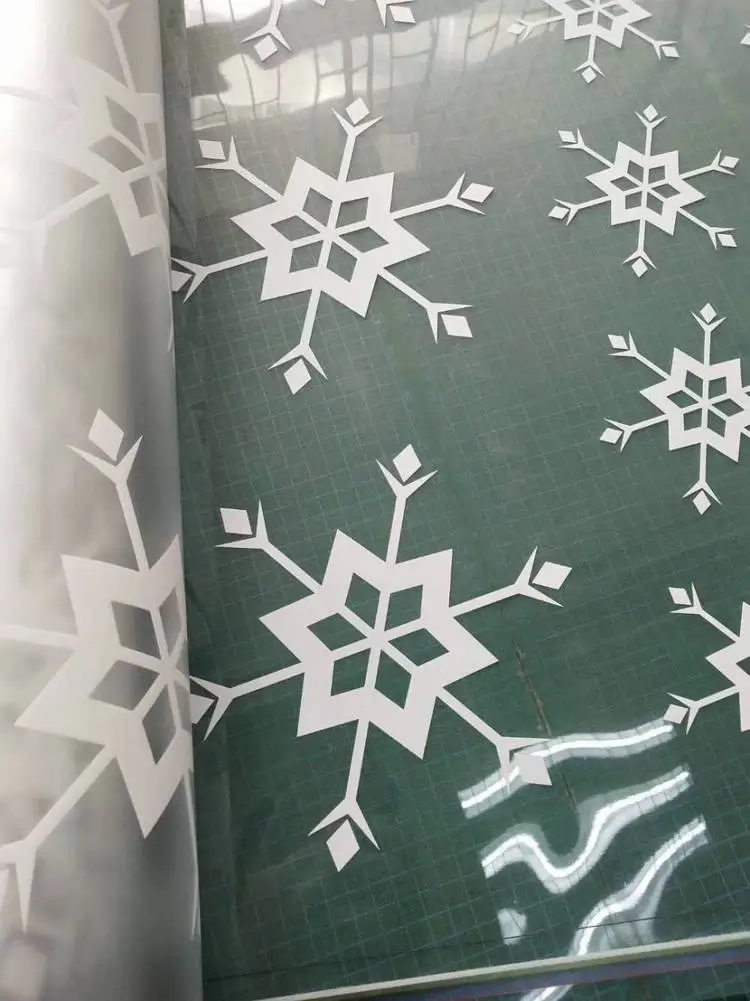
A single order passes through seven stations in our building. Knowing the sequence helps you ask better questions when you audit any UV DTF manufacturer, because a supplier that cannot describe these steps in order is likely outsourcing them:
- Prepress and proofing, 24 to 48 hours. A technician checks resolution (300 dpi minimum), converts color to our ink set’s CMYK profile, outlines strokes, builds the die-line, and emails a digital proof. Nothing prints without written approval.
- RIP and printing. The approved file is ripped and printed on UV flatbed equipment with dedicated white and varnish channels.
- Lamination. A protective varnish layer goes over the cured ink. This layer sets scratch resistance and the feel of the finished transfer, held to the same standard on a trial as on a container order.
- Die-cutting. Contour cutting separates individual designs. A UV DTF manufacturer running a 40-SKU assortment on one sheet cuts every die-line separately, which is why we ask for artwork layered by design.
- Quality control. Each batch is checked against a reference sample from the same film roll using cross-hatch adhesion, water soak, and abrasion tests. Results are logged per batch and can ship with your goods.
- Packing. Sheets are counted, interleaved with release paper, and sealed in moisture-barrier bags inside export cartons.
- Shipping. Express courier, air freight, sea freight, or DDP terms for first orders.
How to Verify a UV DTF Manufacturer Before You Commit
Quotations from a genuine UV DTF manufacturer and from a trading company can look identical on paper. Five checks separate them:
- Live video walkthrough. A factory can show printers running while you are on the call. A trading office usually deflects to a photo set that reappears across several websites.
- Equipment list in writing. A UV DTF manufacturer should name printer models, maximum film width, lamination setup, and cutting equipment without hesitation. “Our partner factory” is a signal, not an answer.
- Samples cut from the production roll. Ask whether the sample comes from the film roll that will run your bulk order, not from generic stock.
- Paperwork. Business license, export registration, and a manufacturing address you can look up. The company name should match across invoice, packing list, and bank beneficiary.
- References by buyer type. Request two references in your own segment — print-on-demand store, sign shop, or gift distributor.
Capacity: What Our Lines Can Ship in a Month
Capacity is where a real UV DTF manufacturer separates itself from a reseller during peak season. Our floor runs multiple UV flatbed units across two shifts, printing on film widths up to 600 mm, with monthly output of around 120,000 transfer sheets at mixed sizes. Lamination and contour cutting run in the same building, so a surge is absorbed internally rather than queued at a subcontractor.
Practical numbers from a UV DTF manufacturer working at this scale: 1,000 sheets ship in 5 to 7 business days from approved artwork, and 10,000 sheets in 10 to 12, with repeat designs moving faster because prepress and die-lines are already locked. If your launch date is tight, give us the in-hand date and we schedule backwards from it. Our guide to planning high-volume UV DTF production covers how to phase a large program across several shipments.
Quality Control Standards We Hold Every Batch To
Consistency is the reason buyers stay with one UV DTF manufacturer instead of chasing the lowest quote each quarter. Every batch passes the same checks before it is packed:
- Cross-hatch tape test. A 5 x 5 grid is cut through the transfer, tape is applied, and pulled at 180 degrees; zero squares lifting is the pass mark.
- 24-hour water soak. Transfers submerged at room temperature show no whitening and no edge lift.
- Abrasion. A 500 g weight with a felt pad is dragged across the graphic 100 times. Scuffing is acceptable; ink removal is not.
- Color match. The first sheet off each run is compared against the approved proof under D50 lighting.
- Humidity. 40 degrees Celsius at 90 percent relative humidity for 72 hours, simulating a container crossing the equator in summer.
Color drift is the complaint we hear most about other suppliers, and it usually traces to one cause: a UV DTF manufacturer that changes film or ink suppliers between runs without telling the buyer. We buy film in bulk against a fixed specification and keep a retention sample from every batch, so a reorder placed eight months later still matches your proof.
MOQ, Pricing, and Lead Time from a UV DTF Manufacturer
Trial orders start at 50 sheets per design, so a print-on-demand store can test a format before committing inventory. Volume tiers begin at 500, 1,000, and 5,000 sheets, with the per-unit price stepping down at each tier. A UV DTF manufacturer quotes per design and per sheet size, so a mixed order of cup wraps, bottle labels, and small decals gets separate line prices rather than one blended rate.
Cost drivers worth understanding before you negotiate: film width, ink coverage, die-cut complexity, lamination grade, and packaging. A UV DTF manufacturer that explains those variables gives you the tools to cut your own cost — for example by grouping small designs onto one sheet instead of running each as a separate job. Proofing takes 24 to 48 hours; we accept AI, PDF, PSD, and 300 dpi PNG files in CMYK or RGB.
Structuring a First Order with a UV DTF Manufacturer
Buyers scale fastest by starting with a 50-piece trial, verifying color and adhesion in their own hands, then moving to the 500 or 1,000-sheet tier for launch. Once a design is proven, private label is the next step: your brand on the sheet, your logo on the packing bag, and your SKU numbers on the carton labels. Our private label UV DTF transfer guide walks through that transition.
Still comparing UV DTF manufacturers? Our checklist for evaluating UV DTF factory capability covers the questions to send before you request pricing.
Frequently Asked Questions
What is the minimum order quantity for a UV DTF manufacturer?
Trial orders start at 50 sheets per design, so a small studio or new print-on-demand store can test a format without holding inventory.
How do I confirm a supplier is a real UV DTF manufacturer rather than a trader?
Ask for a live video walkthrough of the production floor, an equipment list in writing, and samples cut from the film roll that will run your order.
How long does production take for a bulk order?
Standard lead time from a UV DTF manufacturer is 5 to 7 business days for 1,000 sheets and 10 to 12 business days for 10,000, counted from artwork approval. Express courier takes 3 to 5 days, air freight 7 to 10, sea freight 25 to 35.
Are transfers from a UV DTF manufacturer durable enough for drinkware?
Yes. Once cured for 24 hours the graphic is fully waterproof, with no edge lift after a 24-hour soak, and pencil hardness sits in the 4H range. UV-stable inks hold color indoors for about three years.
Can a UV DTF manufacturer print my own artwork and brand?
Yes. Send AI, PDF, PSD, or 300 dpi PNG files in CMYK or RGB, and prepress returns a digital proof within 24 to 48 hours.
Choosing a UV DTF Manufacturer You Can Grow With
Choosing a UV DTF manufacturer comes down to whose numbers survive contact with your own testing: a sample printed from production film, an adhesion test you run yourself, and a reorder that arrives identical to the first batch. Everything between your artwork file and your customer’s hands — prepress, printing, lamination, die-cutting, inspection, export packing, and freight — is work a UV DTF manufacturer should absorb so your team stays focused on selling.
Ready to take your product line to the next level? Contact UV DTF Decor today to discuss your custom transfer requirements and request a free quote.
54 ready-made designs, custom prints and sample packs — sent to your inbox.