
The custom merchandise and promotional product industry is undergoing a massive shift. While traditional apparel decoration has relied heavily on standard textile DTF (Direct-to-Film), a parallel revolution has taken over the world of hard, rigid surfaces: UV DTF (Ultraviolet Direct-to-Film).
For e-commerce store owners, print shops, and corporate branding agencies, scaling this technology doesn’t mean purchasing individual small desktop printers. True scalability and profitability lie in partnering directly with an industrial-scale UV DTF transfer factory.
This comprehensive guide breaks down how a commercial production factory operates, why outsourcing your wholesale custom printing is the most profitable move, and how to optimize your setup to achieve maximum Google visibility and high-converting business-to-business (B2B) leads.
What is a UV DTF Transfer Factory and Why Does It Matter?
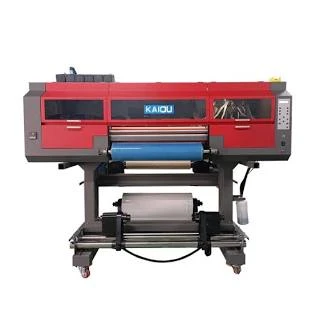
A professional UV DTF transfer factory is a specialized manufacturing facility equipped with industrial roll-to-roll UV printing machinery and inline laminators. Unlike DIY setups or small boutique operations, a factory focuses on high-volume, enterprise-grade output of custom “crystal stickers” or ready-to-apply hard-surface transfers.
The underlying technology utilizes specialized ultraviolet-curable inks printed directly onto a primary release liner (known as Film A). Immediately after the printheads deposit the ink, high-intensity UV LED lamps pass over the substrate, instantly solidifying the resin. The machine then automatically applies a high-tack adhesive and a clear carrier sheet (Film B) via an inline lamination system.
The final product delivered by a commercial factory is a high-gloss, pressure-sensitive transfer. The end-user simply strips away the backing, applies the sticker to a rigid surface with manual pressure, and peels off the top protective layer. No heat press, mug oven, or weeding is ever required.
The Industrial Workflow: How a Factory Produces UV DTF Transfers
To understand why factory-level quality outperforms amateur setups, it helps to analyze the manufacturing process. Commercial facilities follow a strict, automated sequence to ensure color accuracy, adhesive uniform coating, and structural durability.
1.File Ingestion & AI-Driven RIP Optimization:Pre-Production。
Customer designs are uploaded into advanced Raster Image Processor (RIP) software. The system automatically nests individual files into tight “gang sheets” on large-format digital canvases (typically 60cm wide) to minimize material waste and optimize printhead travel speed.
2.Multi-Layer Ink Deposition:Printing Phase。
The roll-to-roll machine uses micro-piezo printheads to lay down multiple layers simultaneously. First, a specialized primer/varnish layer or color layer is laid down, followed by a dense white ink backing. This multi-pass precision ensures that even on dark or transparent substrates, the graphics remain completely opaque and vivid.
3.Instant Ultraviolet Curing:Chemical Solidification。
As the film moves forward, integrated UV-LED lamps flash the wet ink with specific wavelengths of light. This triggers a photochemical reaction that instantly cures the liquid resin into a solid, scratch-resistant polymer with a premium 3D textured, raised effect.
4.Inline Cold/Hot Lamination:Adhesive Binding。
The cured A film immediately passes through synchronized pressure rollers where the B film (the transfer carrier tape) is laminated on top. Modern factory systems utilize vacuum suction platforms to ensure a completely flat surface, eliminating the tiny speckling or micro-bubbles that plague smaller desktop laminators.
5.Quality Control & Precision Slitting:Final Packaging。
Automated optical sensors scan the finished rolls for printhead deflection or tracking errors. The rolls are then cut down into individual sheets, packaged in moisture-barrier wraps, and prepared for high-speed global shipping.
Why Outsource to a UV DTF Transfer Factory vs. In-House Production?
Many print shop owners wonder if they should buy a small UV flatbed printer or contract production out to a dedicated supplier. While a small internal machine offers immediate control, it introduces significant overhead, printhead clogging risks, and mechanical limitations.
The data highlights a clear contrast when comparing a small, independent print setup against the operational infrastructure of a specialized production factory:
| Operational Metric | In-House Desktop / Entry-Level Setup | Industrial UV DTF Transfer Factory |
| Initial Capital Investment | $5,000 to $20,000 (Equipment + Consumables) | $0 (Pay per order/gang sheet) |
| Average Cost per Sq. Meter | High ($15 – $25 due to low-volume ink buying) | Low ($4 – $8 due to massive raw material scaling) |
| Daily Output Capacity | Limited (approx. 5 – 15 meters per day) | Scalable (hundreds of meters per day across multiple lines) |
| Specialty Finishes Available | Standard CMYK + White + Basic Gloss | Matte, High-Gloss Varnish, Gold/Silver Hot Stamping, Glitter |
| Maintenance Burden | High (daily head cleans, humidity control, ink flushing) | None (Handled entirely by the factory engineering team) |
The Profit Margin Reality: Sourcing from a commercial factory allows businesses to purchase a 24″ x 36″ gang sheet packed with small logos for under $10, while the retail market value of those individual, ready-to-apply decals can exceed $80 to $100. The profit margins consistently hover between 700% and 1,000%.
Key Performance Characteristics of Premium Factory Transfers
When sourcing transfers globally, distinguishing an exceptional product from a subpar one comes down to testing its physical durability. A world-class factory uses high-grade polyurethane (TPU) adhesive formulations and premium inks that yield specific physical benefits.
1. Superior Scratch and Abrasion Resistance
Top-tier factories use automotive-grade UV inks that resist daily wear and tear. Once applied to a substrate, the hard acrylic-resin outer shell stands up to keys, drop impacts, and rough handling, making them ideal for high-use items like phone cases, laptops, and thermos flasks.
2. Dishwasher and Weather Proofing
Cheaper adhesives fail when exposed to moisture or temperature fluctuations. Industrial-grade transfers utilize moisture-resistant adhesive layers that anchor permanently to non-porous materials. They easily withstand repeated residential dishwasher cycles and resist UV yellowing when placed on outdoor vehicle windows or commercial signage.
3. Tactile 3D Embossing
A hallmark of specialized factories is their ability to control ink layer thickness via the RIP software. By printing thicker layers of white ink beneath the CMYK profile and topping it with a dimensional varnish layer, they deliver a raised, premium texture that mimics expensive direct-object printing or traditional metal embossing.
What Surfaces Can Factory-Produced UV DTF Transfers Treat?
While traditional fabric transfers are limited to textiles, UV DTF is engineered for virtually any hard, flat, curved, or cylindrical object. As long as the target surface is clean, dry, and non-porous, the bonding mechanism will hold long-term.
- Glass and Ceramics: Ideal for custom beer glasses, wine bottles, ceramic coffee mugs, and storefront windows.
- Metals: Excellent adhesion on anodized aluminum water bottles, stainless steel tumblers, and brass plates.
- Plastics and Acrylics: Widely used for tech accessories, gaming consoles, power banks, and corporate acrylic awards.
- Finished Wood and Leather: Perfect for rustic home decor signs, custom wooden coasters, and premium leather portfolio covers.
Important Restriction: UV DTF transfers are entirely unsuited for soft textiles, apparel, or highly flexible, raw fabrics. The cured ink layer is rigid; attempting to apply it to a t-shirt or canvas bag will result in immediate cracking and peeling as soon as the material flexes or enters a washing machine. For apparel, always use standard textile DTF transfers.
How to Prepare Artwork for Seamless Factory Execution
To prevent production delays, color shifting, or edge-lifting when submitting orders to a wholesale factory, your digital files must conform to explicit technical parameters.
Use Correct File Formats and Resolution
Always supply artwork in true vector format (such as .EPS, .PDF, or .SVG) or high-resolution raster format (.PNG) exported at a minimum of 300 DPI (Dots Per Inch). Low-resolution web images will result in pixelated, blurry edges when scaled up on industrial printing beds.
Maintain a Transparent Background
Every pixel in your file that is not part of the intended graphic must be completely transparent. If a design includes a stray white background box, the factory’s automated software will read it as active data and print a solid layer of white ink underneath it, ruining the cutout effect of the sticker.
Design with CMYK Color Space
Industrial UV printers operate using a CMYK (Cyan, Magenta, Yellow, Key/Black) color model, sometimes supplemented with light cyan, light magenta, or orange. If you build your design files in an RGB (Red, Green, Blue) space intended for digital screens, severe color shifting can occur during the physical printing process. Always convert your workspace to CMYK before finalizing your art.
Observe Minimum Line Weights
Because the transfer relies on structural cohesion to lift off the film cleanly, ultra-thin details can struggle to release or adhere. Ensure all standalone lines have a minimum thickness of 1.5 points (approx. 0.5mm). If your graphic features hyper-intricate text or detached dots, consider adding a thin, transparent outline or a solid back-plate to hold the components together as a single unified piece.
Sourcing Wisely for Maximum Growth
Partnering with an experienced UV DTF transfer factory removes the technical bottlenecks of equipment maintenance, high labor costs, and production constraints from your business model. By shifting your focus toward design creation, marketing, and customer fulfillment, you can leverage industrial-grade manufacturing scalability to maximize your margins.
When choosing a factory partner, prioritize suppliers that provide clear templates, offer automated gang-sheet builders, maintain transparent turn-around times, and back their products with rigorous scratch and wash-durability guarantees.