
The custom merchandise and promotional product market is undergoing a massive shift. While traditional Direct-to-Film (DTF) apparel printing continues to dominate the textile space, businesses looking to personalize rigid, hard surfaces are rapidly moving toward Ultraviolet Direct-to-Film (UV DTF) technology.
If you run a print shop, an e-commerce brand, or a high-volume promotional agency, sourcing your decals and wraps from a professional UV DTF Transfer Factory instead of using a local middleman can dramatically drop your overhead while maximizing your production margins.
But with hundreds of manufacturers popping up globally, how do you distinguish a premium, enterprise-grade factory from a low-quality workshop? This comprehensive guide breaks down the mechanics of industrial UV DTF production, the financial advantages of direct factory partnerships, and how to audit a supplier to ensure your custom branding business stays ahead of the competition.
What is UV DTF Printing, and Why Is It Booming?
To appreciate why a dedicated production factory matters, it helps to understand the underlying technology. UV DTF combines the high-definition vibrancy of UV-curable inks with the versatile application mechanics of direct-to-film transfers.
Unlike standard textile DTF transfers—which rely on a hot-melt polyurethane (TPU) powder and an industrial heat press to bond ink to fabric fibers—UV DTF is a pressure-sensitive, “peel-and-stick” technology designed entirely for hard, non-porous substrates.
The manufacturing process follows a precise sequence: a multi-head digital printer deposits layers of high-opacity white ink, vibrant CMYK color inks, and a protective, high-gloss clear varnish directly onto a specialized, adhesive-coated film (commonly referred to as Film A). Immediately after the ink hits the film, an ultraviolet LED lamp cures it instantly, hardening the polymers into a durable, raised structure. Finally, an inline laminating machine presses a high-tack carrier sheet (Film B) over the print, sealing the graphic and preparing it for distribution.
The ultimate breakthrough here is the application workflow. Your end-use customer or assembly line worker doesn’t need heat presses, mug ovens, or complex transfer steps. They simply clean the object, position the transfer, apply firm pressure, and pull off the carrier sheet.
Inside an Industrial UV DTF Transfer Factory
When you partner with a legitimate, large-scale UV DTF Transfer Factory, you are tap-routing into an automated ecosystem capable of outputting thousands of linear meters of pristine film daily. A true manufacturing facility looks vastly different from a localized print shop using converted desktop equipment.
As illustrated in the technical workflow above, a professional factory layout ensures that printing, lamination, and quality control function as an uninterrupted, automated sequence:
- Multi-Head Industrial Printing Arrays: Commercial factories utilize heavy-duty, wide-format roll-to-roll printers equipped with industrial printheads (such as Epson i3200-U1 or Ricoh models). These machines run multiple channels simultaneously, enabling a thick, uniform white foundation layer to prevent the background color of your object from bleeding through the artwork.
- Precision UV LED Curing Units: The intensity of the UV lights must be dynamically managed based on production speed. If the curing is too weak, the layers will smudge during lamination; if it is too intense, the film can warp, and the varnish layer loses its flexible properties, making application on curved items extremely difficult.
- Continuous Inline Tension-Controlled Laminators: Instead of manual rollers, factories use motorized, heat-assisted laminators with adjustable tension bars. This ensures that Film B bonds to the printed Film A without creating tiny air pockets, wrinkles, or adhesive speckling.
- Automated Vacuum Suction Platforms: During high-speed printing, the PET film must stay perfectly flat to avoid a “head strike” (where the delicate printhead scrapes against the film). Industrial vacuum beds hold the material flush to the millimeter.
Sourcing Direct vs. Middlemen: The Financial Breakdown
Many smaller brands buy their custom wraps from local retail vendors who buy from regional distributors. While this works well for tiny, ad-hoc orders, it is an absolute margin killer as your volume grows. Partnering with an overseas or domestic UV DTF Transfer Factory directly scales your profitability by lowering your cost-per-print down to a fraction of retail prices.
The Consumables Math: In a wholesale factory setting, utilizing bulk gang sheets (where hundreds of logos are tiled onto a single continuous roll) allows production costs to fall significantly under $1 per standard tumbler wrap. Retail transfer sellers frequently charge anywhere from $3 to $7 for that exact same footprint.
| Evaluation Metric | Direct UV DTF Transfer Factory | Local Retail/Reseller Vendor |
|---|---|---|
| Pricing Structure | Tiered wholesale volume discounts (by the meter) | Flat rate per piece or small gang sheet |
| Customization Options | Choice of specialty finishes (Gold Foil, Silver Foil, Chameleon, Matte Varnish) | Standard glossy varnish only |
| Turnaround Control | Dedicated production queues with predictable daily output | Subject to third-party shipping delays and machine downtime |
| Quality Consistency | Raw materials (inks, films, adhesives) are batch-tested internally | Sourced from changing suppliers based on spot market pricing |
Application Versatility: What Your Business Can Build
The physical output of a high-end factory allows your brand to place complex, photographic logos onto items that were previously impossible or incredibly expensive to customize via traditional screen printing,
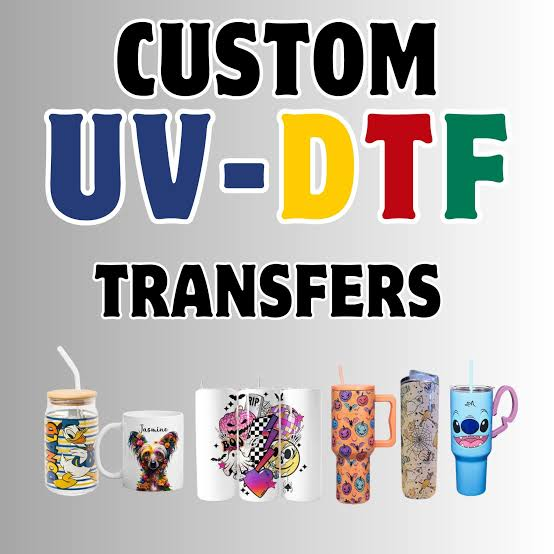
Because modern UV-curable inks are engineered to be highly flexible, water-resistant, and scratch-proof, factory-grade transfers adhere beautifully to a vast landscape of consumer and industrial hard goods:
- Custom Drinkware: Ideal for high-gloss UV DTF cup wraps on bamboo-lidded glass cans, stainless steel insulated tumblers, ceramic mugs, and acrylic water bottles.
- Consumer Electronics: Perfect for adding durable decals to hard plastic phone cases, aluminum power banks, matte-finish laptop shells, and custom gaming controllers.
- Corporate Gifting & Office Supplies: Instantly brand wooden storage boxes, leather-bound notebooks, acrylic awards, aluminum pens, and heavy paperboard gift packaging.
- Industrial & Signage Applications: Apply warning labels, asset tracking markers, and brand marks directly onto powder-coated metals, structural plastics, and glass windows.
The Correct Method for Applying Factory UV DTF Transfers
To ensure your end products maintain maximum adhesion and longevity, you must execute the application process cleanly. Pass these instructions down to your production assembly team or include them as an insert card if you ship ready-to-apply decals to retail customers.
1.Prepare and Clean the Substrate Surface:Crucial for a Long-Lasting Bond。
Thoroughly wipe down the item (glass, metal, plastic) with 70% isopropyl alcohol to strip away fingerprint oils, factory dust, or shipping moisture. Let the surface dry completely. Any left-behind wax or grease will cause the adhesive layer to repel over time.
2.Squeegee and Secure the Film Blend:Pre-application Pressure。
Before peeling the backing, lay the transfer sheet flat on a hard table. Use a plastic squeegee or a firm felt pad to rub across the clear top carrier film (Film B). This step ensures the printed graphic is fully attached to the transfer tape and will lift cleanly off the white grid backing paper (Film A).
3.Peel the Backing Sheet Away Slowly:Angle Matters。
Flip the decal face down and peel the thick, opaque backing paper away from the clear transfer tape at a sharp 180-degree angle. Keep the clear film completely flat against your table while pulling the paper away. Ensure that all small pieces of text or fine details remain stuck to the clear film.
4.Position and Bond the Transfer:One Shot to Align。
UV DTF adhesive is incredibly high-tack and cannot be repositioned once it touches a surface. Hover the graphic over your object to line it up perfectly. Touch down from the center outward, then use firm thumb pressure or a squeegee to rub the design onto the substrate, working from the middle to the outer edges to eliminate air bubbles.
5.Remove the Clear Carrier Film:The Final Reveal。
Gently rub the entire design one last time, paying extra attention to tiny edge elements. Start at one corner and slowly peel away the clear carrier sheet at a low 45-degree angle. If any part of the graphic begins to lift with the tape, lay it back down, rub it firmly, and try peeling again.
4 Critical Factors to Audit When Selecting a Factory Partner
If you are ready to send your designs to a global UV DTF Transfer Factory, do not just pick the lowest bidder on a wholesale marketplace directory. Run every potential supplier through these structural checkpoints:
1. Optical Closeness of the Raised 3D Varnish
The hallmark of a premium UV DTF transfer is its tactile, premium texture. Lower-tier print shops skip the varnish pass entirely or apply a paper-thin layer to save money on consumables. Ask for raw macro photos of their production samples. A top-tier factory applies a dense, targeted coat of gloss varnish that gives the transfer a distinct 3D embossed look and feel, closely mimicking expensive direct-to-object screen printing.
2. Adhesive Chemical Stability and “Haloing”
Poorly formulated adhesives leave a sticky, visible residue around the perimeter of your design after peeling the carrier sheet—a defect known in the printing industry as “haloing.” Over weeks of storage, low-grade adhesives can also turn yellow or turn brittle. Ensure your manufacturer utilizes high-grade, premium German or Japanese clear adhesives that cure with zero haloing and stay completely crystal clear over long shelf lives.
3. Verification of Ink Certifications
If you are selling customized water bottles, children’s lunchboxes, or tech gear, the chemistry of the ink matters immensely. Confirm that your chosen factory operates with low-VOC (Volatile Organic Compound), eco-friendly UV inks that have achieved compliance certifications (like GREENGUARD Gold or OEKO-TEX standards). This prevents skin irritation issues and protects your brand from regulatory setbacks.
4. Machine Layout and Gang Sheet Capabilities
A modern facility should offer an automated, digital “Gang Sheet Builder” system natively integrated into their wholesale portal. This allows you to upload vector files (SVG or PDF format) or high-resolution, transparent 300 DPI PNGs, group them tightly on a continuous printing layout, and instantly see your structural pricing scale based on linear meters rather than individual sticker costs.
Conclusion: Driving Long-Term Growth via Direct Supply Chains
Integrating UV DTF technology into your company’s product lineup opens the door to high-margin hard goods customization without forcing you to buy $20,000 worth of flatbed printing machinery. By transitioning your procurement strategy away from middlemen and establishing a direct operational line to an industrial UV DTF Transfer Factory, you insulate your business from erratic material quality, dramatically increase your processing speeds, and unlock wholesale pricing margins that allow your brand to scale seamlessly.