
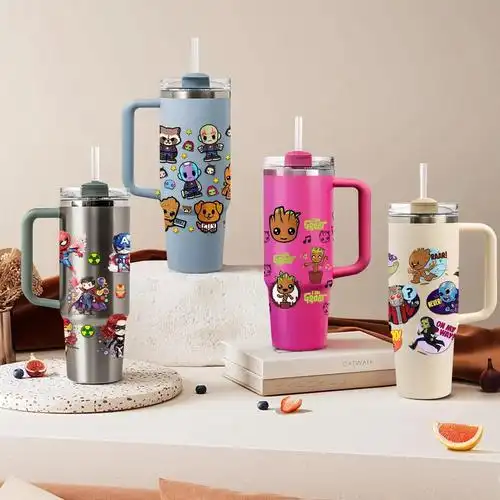
In the fast-evolving world of custom printing and brand packaging, technology is constantly advancing. If you are looking for a custom solution that requires no heat, offers easy peel-and-apply application, and delivers a premium 3D embossed texture, UV DTF Stickers (Ultraviolet Direct-to-Film Transfers) are a core technology you cannot ignore.
Whether you are a B2B procurement manager seeking high-quality brand packaging solutions or a retailer selling custom tumblers and crafts, understanding UV DTF stickers can significantly boost your product’s premium value and production efficiency. This article will comprehensively explain the working principles, core advantages, application scenarios, and frequently asked questions about UV DTF stickers.
What are UV DTF Stickers?
UV DTF (Ultraviolet Direct-to-Film) is an innovative printing process that combines UV printing technology with DTF (Direct-to-Film) transfer technology.
Simply put, a printer applies UV-curable inks (including white ink, color ink, and varnish) directly onto a special “A film,” which is then laminated with a “B film.” To use it, you simply peel off the backing film, apply the design to the target surface, and peel off the top protective film, transferring the design perfectly onto the object.
Unlike traditional screen printing or heat transfers, UV DTF Stickers do not require a heat press. They can be transferred with simple finger pressure at room temperature, completely breaking the limitations of materials and shapes.
Why are UV DTF Stickers So Popular? (Core Benefits)
To stand out in today’s fiercely competitive market, visual presentation is crucial. UV DTF stickers have rapidly captured the market due to the following irreplaceable advantages:
- Premium 3D Embossed Texture: Thanks to multiple layers of ink and high-gloss UV varnish, the printed designs come with a tactile 3D feel and a glossy finish, instantly giving products a high-end, custom look.
- Peel and Apply, No Heat Required (Cold Transfer): Traditional DTF requires a high-temperature heat press, whereas UV DTF is a cold transfer technology. This means you can apply it to heat-sensitive materials (like thin plastics, glass, and wood), greatly expanding the boundaries of application.
- Extreme Durability (Waterproof & Scratch-Resistant): Once the UV ink is instantly cured by ultraviolet light, it gains exceptional adhesion. High-quality UV DTF stickers are completely waterproof, scratch-resistant, and UV-fade resistant. They can even withstand a certain degree of dishwasher cycles.
- No Weeding: Traditional vinyl requires significant manual labor to cut and weed out the negative space. UV DTF stickers only transfer the inked areas; the transparent areas are not applied, drastically saving time and labor costs.
Common Applications of UV DTF Transfers
Thanks to their versatility, UV DTF stickers can adhere perfectly to almost any hard, smooth surface. The most popular commercial and retail applications include:
- Hard Containers: Libbey glass cans (16oz), mugs, Yeti tumblers, acrylic cups, etc.
- Brand Packaging & Logo Transfers: Customizing logos on cosmetic jars, gift boxes, and electronic casings. Ideal for low-volume, high-frequency B2B flexible production.
- Promotional Items: Corporate gifts like notebooks, helmets, golf balls, pens, and lighters.
- Home & Industrial Signage: Wooden signs, acrylic door plates, metal instrument panels, etc.
How to Apply UV DTF Stickers Correctly? (A 4-Step Minimalist Guide)
The application process is incredibly simple, which is why it’s often called the “universal sticker.” Just follow these steps:
- Clean the Surface: Use an alcohol wipe to thoroughly clean the target surface, ensuring it is completely free of dust, oil, or moisture.
- Peel the Backing: Carefully peel the transparent backing film (A film) off the back of the UV DTF sticker, ensuring the entire design remains on the top transfer film (B film).
- Position and Apply: Align the design with your target spot and gently place it down. Note: Once it touches the surface, the glue is highly adhesive and very difficult to reposition.
- Squeegee and Peel: Use a squeegee or your fingers to press firmly over the design, pushing out any air bubbles to ensure full adhesion. Finally, slowly peel off the top transfer film at a 180-degree angle.
FAQ: Frequently Asked Questions About UV DTF Stickers
To resolve any doubts you might have during procurement or usage, we have compiled the following common questions:
1. What is the difference between UV DTF and regular DTF?
Regular DTF (Direct-to-Film) is mainly used for fabrics and textiles (like t-shirts and canvas tote bags). It requires a heat press for high-temperature transfer and the application of hot melt powder. UV DTF is primarily used for hard surfaces (like glass, metal, and plastic). It uses UV-cured ink and relies on a special strong adhesive for cold transfer, requiring absolutely no heat or powder.
2. Are UV DTF stickers waterproof? Can they go in the dishwasher?
Yes, high-quality UV DTF stickers offer excellent waterproof and scratch-resistant performance. After being applied correctly and left to cure for 24-48 hours, they can withstand daily washing. While some premium stickers can survive the dishwasher, hand washing is generally recommended for tumblers and containers to maximize their lifespan.
3. Can I apply them to curved or irregular surfaces?
They can be applied to slightly curved surfaces (like cylindrical cups). However, because the UV-cured ink layer has a certain thickness and rigidity, applying it to highly curved surfaces or those with complex, uneven textures may result in lifted edges or incomplete adhesion.
4. How long do UV DTF stickers last?
When unused, it is recommended to store them in a cool, dry, and dark environment. The shelf life is typically around 6 to 12 months. Prolonged exposure to high heat or strong light may degrade the adhesive’s performance. Once successfully applied to an object, their durability can last for years.
5. Can they be applied to soft fabrics?
Not recommended. UV DTF stickers are designed specifically for hard and semi-hard surfaces. If applied to soft fabrics like t-shirts that require frequent folding and stretching, the design will easily crack or peel off. For fabric customization, please choose traditional heat transfer DTF.
Conclusion
Whether you want to quickly upgrade your product packaging or launch a personalized tumbler customization business, UV DTF Stickers have become one of the most promising customization processes available today. With a remarkably low barrier to entry, stunning 3D visual effects, and a highly efficient workflow, mastering this technology will open up infinite creative possibilities for your brand or business.